
Year-End Payroll Checklist: W-2s, 1099s and Form 940
Written by Dane Janas, EA — Founder, Portside Tax & Accounting
In this article
- The year-end payroll checklist at a glance
- Step 1: Confirm names, Social Security numbers and addresses
- Step 2: Reconcile your payroll before you file
- Step 3: W-2 deadline and when W-2s are due for 2026
- W-2 and 1099 deadlines at a glance
- Step 4: 1099-NEC for contractors
- Step 5: Form 940, the annual federal unemployment (FUTA) return
- Step 6: State filings, the part that changes by state
- Step 7: What Gusto does and what you do
- Frequently asked questions
January is the busiest month in payroll, and most of the work happens in December. This year-end payroll checklist walks through names and addresses, W-2s, 1099-NECs, Form 940, state filings, and what Gusto handles versus what stays with you. Every deadline, threshold and rate below links to the IRS page that states it, with the date it was checked.
This is general information, not advice for your situation. Portside is an Enrolled Agent firm, not a CPA firm.
The year-end payroll checklist at a glance
- Confirm names, Social Security numbers and addresses for every employee and contractor.
- Reconcile your payroll records, including any payroll run outside your payroll system.
- Review W-2s and plan to furnish them and file with the Social Security Administration (SSA) on time.
- Decide who needs a 1099-NEC and collect any missing Forms W-9.
- Prepare Form 940, the annual federal unemployment (FUTA) return.
- Handle your state filings, which have their own forms and dates.
- Know what your payroll provider does and what you do.
- Keep your records in an order you can find again.
Step 1: Confirm names, Social Security numbers and addresses
A W-2 with the wrong name or number causes trouble later, so check before you file, not after. The IRS notes in Publication 15 that employers may use the SSA''s Social Security Number Verification Service to check that an employee''s name and number match SSA records.
- Ask employees to confirm their legal name and mailing address in your payroll system. Their W-2 goes to the address you have on file.
- Ask anyone whose withholding situation changed this year to submit a new Form W-4. Publication 15 says employees should do this when they want to change withholding.
- If your business address or responsible party changed, the IRS uses Form 8822-B for that. The IRS page says changes to the responsible party must be reported within 60 days.
- For contractors, collect a Form W-9 before you make the first payment. It is much easier than chasing one in January.
Step 2: Reconcile your payroll before you file
Publication 15 lists reconciling your quarterly Forms 941 with the Forms W-2 and W-3 as a year-end responsibility. In plain terms, the wages and withholding on your four quarterly returns should agree with the totals on your W-2s. If they do not, find out why before the forms go out (Publication 15). For a refresher on how the quarterly and annual returns differ, see our guide to Form 940 vs. Form 941.
Common reasons the totals do not match:
- A payroll was run outside your payroll system, for example a manual check or a payroll before you switched providers.
- A bonus, fringe benefit or other one-time payment was never reported.
- An employee was set up with the wrong address or state partway through the year.
Step 3: W-2 deadline and when W-2s are due for 2026
The IRS says the due date for filing 2026 Forms W-2 and W-3 with the SSA is February 1, 2027, and that you generally must furnish copies to employees by February 1, 2027. (General Instructions for Forms W-2 and W-3)
Why February 1 and not January 31$1 January 31, 2027 falls on a Sunday. Publication 15's calendar explains that when a due date lands on a weekend or legal holiday, the due date is the next business day. (Publication 15)
The same instructions say you must file electronically if you are required to file at least 10 information returns. W-2s count toward that number along with other information returns. For the form itself, see the IRS's About Form W-2 page.
W-2 and 1099 deadlines at a glance
- W-2 and W-3 forms for employees and the SSA - due by February 1 (W-2 and W-3 instructions)
- 1099-NEC forms for contractors and the IRS - due by January 31 (1099-MISC and 1099-NEC instructions)
- Form 940 for the IRS - due by January 31 (Form 940 instructions)
Step 4: 1099-NEC for contractors
Form 1099-NEC reports payments to people who are not your employees. According to the IRS instructions, you file one for each person you paid at least $2,000 for services in the course of your business (or to an attorney).
- Corporations. The instructions say payments to a corporation, including an LLC taxed as a C or S corporation, are generally not reportable. They list exceptions, such as attorneys'' fees and certain medical payments.
- Card payments. Payments made by credit card or through a payment app are reported on Form 1099-K by the card or payment company, not on your 1099-NEC.
- Collect the W-9. The W-9 gives you the contractor''s legal name, address and taxpayer identification number to put on the form.
- Electronic filing. The instructions say the e-file requirement applies when you file 10 or more information returns in total.
Step 5: Form 940, the annual federal unemployment (FUTA) return
Form 940 reports your federal unemployment tax for the year. The IRS says only employers pay FUTA tax. (About Form 940)
- Due date. The Form 940 instructions say that if you deposited all your FUTA tax when it was due, you may file by February 10 instead of January 31. (Instructions for Form 940)
- Wage base. The instructions say FUTA tax applies to the first $7,000 you pay to each employee during the calendar year.
- Deposits. The instructions say that if your FUTA tax is more than $500 for the calendar year, you must deposit at least one quarterly payment.
- Credit reduction states. If you paid wages subject to the unemployment laws of a state with an outstanding federal loan, your FUTA credit is reduced, and you report that on Schedule A (Form 940).
Form 940 is separate from the quarterly Form 941. Our guide to Form 940 vs. 941 covers the difference.
Step 6: State filings, the part that changes by state
Federal forms are the same everywhere. State filings are not. Depending on where your employees work, year-end typically brings some combination of:
- a state income tax withholding reconciliation or annual return,
- a state unemployment tax wage report for the fourth quarter,
- state copies of W-2s and 1099s, and
- local or city payroll taxes in places that have them.
Forms, filing methods and due dates differ from state to state, so we do not list them here. The IRS keeps a page of state government websites with links for each state, a good starting point for finding your state's revenue and workforce agencies. If you have employees in more than one state, check each one.
Step 7: What Gusto does and what you do
If you run payroll in Gusto, much of the year-end work is automated, but not all of it. Gusto's support article What to expect during tax filing season describes the process.
If January sneaks up on you every year, an earlier handoff is easier than a late one. Portside runs payroll for small businesses, including setup in Gusto, quarterly and annual filings, and year-end forms. An IRS-enrolled Enrolled Agent reviews the work. You can read more on our payroll services page.
Frequently asked questions
When are W-2s due in 2027?
The IRS says the due date for filing 2026 Forms W-2 with the SSA, and for furnishing copies to employees, is February 1, 2027. January 31, 2027 is a Sunday, so the due date moves to the next business day.
Do I need to send a 1099-NEC to an LLC?
It depends on how the LLC is taxed. The IRS instructions say payments to a corporation, including an LLC taxed as a C or S corporation, are generally not reportable on Form 1099-NEC, with exceptions such as attorneys'' fees. Payments to an LLC taxed as a sole proprietorship or partnership generally are, if they total at least $2,000.
What is the 1099-NEC threshold for 2026?
The IRS instructions say to file Form 1099-NEC for non-employee compensation of $2,000 or more.
Does my payroll provider file Form 940 for me?
It depends on the provider and the plan. Gusto says it uses the information in your account to pay and file your company''s annual taxes at the start of the new year. Check the forms listed in your account, and ask your provider directly if a form is not there.
About the Author
Dane Janas, EA
Dane Janas, EA is an IRS-Enrolled Agent and the founder of Portside Tax + Accounting, a fully remote firm serving individuals, small businesses, nonprofits, and entrepreneurs nationwide. With more than 12 years of experience across tax preparation, accounting, payroll, multistate compliance, S corporations, LLCs, and 990-series filings, Dane has worked in traditional public accounting, in-house finance roles, and as an entrepreneur, and he has led remote teams of tax professionals along the way. He is an IRS-licensed Enrolled Agent and Quickbooks ProAdvisor. Dane writes to turn confusing tax and accounting topics into clear, practical guidance, so readers can make confident decisions about their money and their business. Based in coastal North Carolina, he is originally from Pennsylvania.
Additional Resources
For the most current tax information and regulations, visit the official IRS website or consult with a qualified tax professional like Portside.
The content on this blog is provided for general informational and educational purposes only. It is not tax, accounting, or legal advice, and it should not be relied upon as such. Tax and legal rules change often, vary by state and locality, and depend on your specific facts and circumstances, so the information here may not apply to your situation or may be out of date by the time you read it. Reading this article, or contacting Portside Tax & Accounting through this website, does not create a client relationship, an attorney-client relationship, or any other professional engagement. We do not provide legal services or practice law. A client relationship exists only after a written engagement agreement has been signed. Please consult a qualified tax professional or licensed attorney about your specific situation before making any decisions or taking action. Portside Tax + Accounting makes no guarantees about the accuracy, completeness, or timeliness of this content and is not responsible for any loss or penalty resulting from reliance on it. Links to third-party websites are provided for convenience and do not imply endorsement.
Related Articles
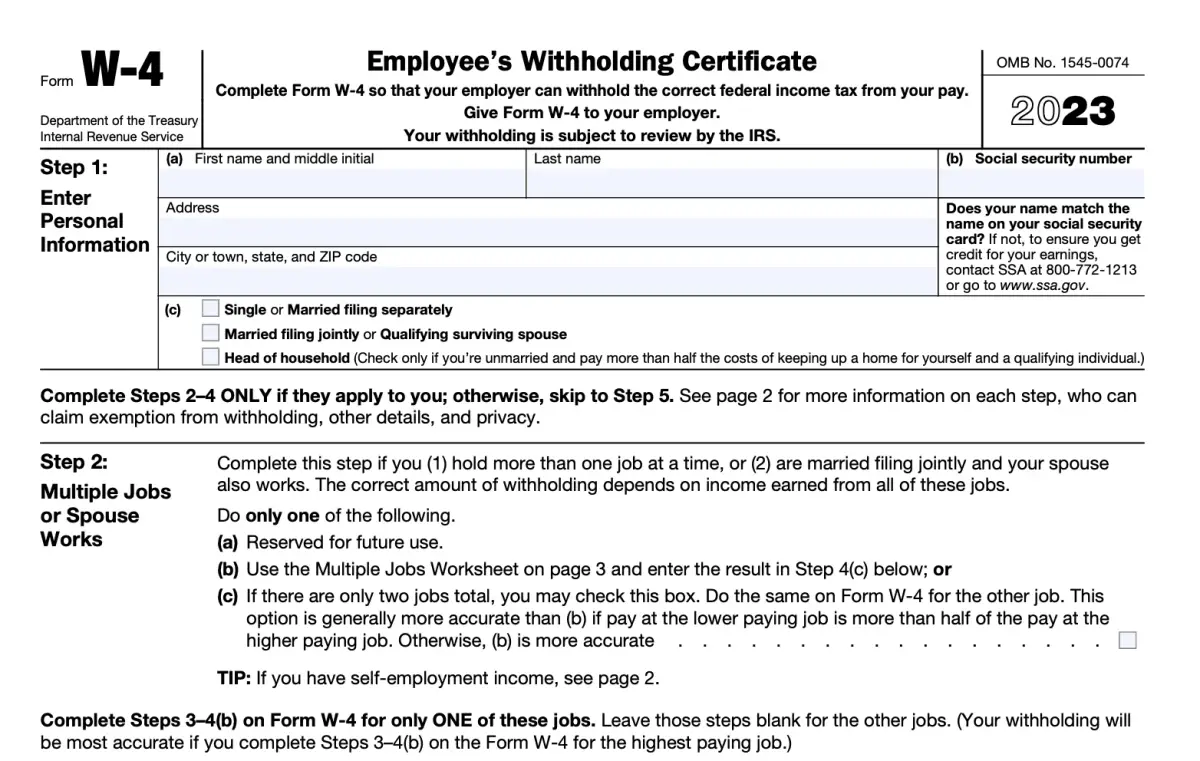
How to Fill Out IRS Form W-4, Step by Step
Getting your W-4 right prevents surprise tax bills or oversized refunds. Here's a step-by-step walkthrough of the form.
May 8, 2026

1099 Contractor vs. Employee: Key Differences
Choosing between 1099 and employee status affects taxes, benefits, and legal risk. Here's how the two arrangements actually compare.
February 28, 2026
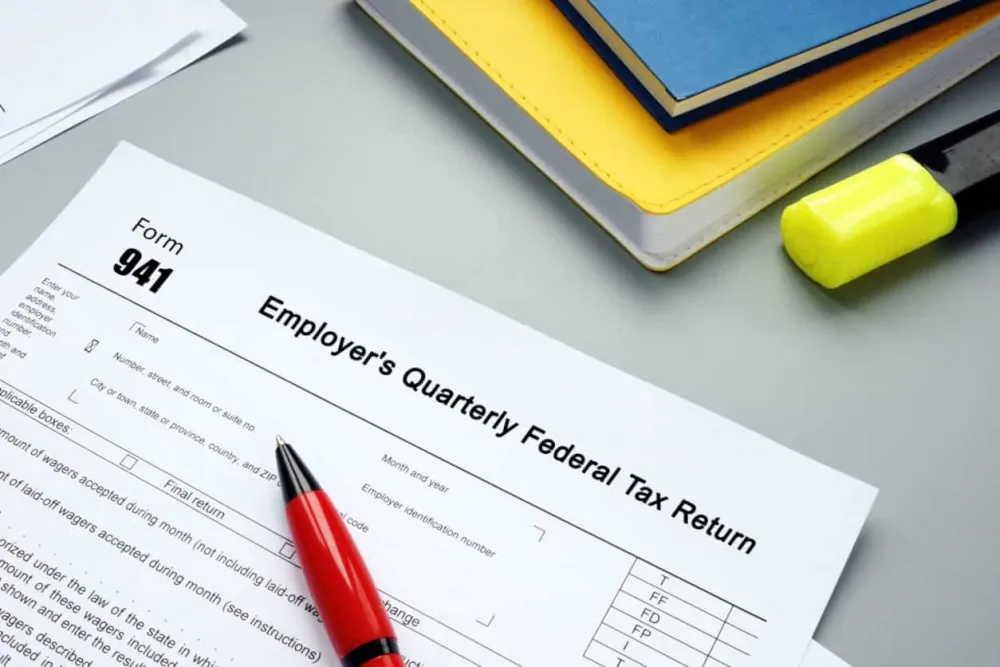
IRS Form 940 vs. 941: What's the Difference?
Form 940 covers federal unemployment tax; Form 941 covers quarterly payroll tax. Here's what each one reports and when it's due.
November 18, 2025
Need help with payroll?
Tell us about your team and how you pay them today, and Portside will follow up with a plan.
Tell Portside more about your payroll needsCurious how Portside can help you?
Let Portside help you navigate your financial challenges with personalized solutions tailored to your needs.
Learn More & Get Started